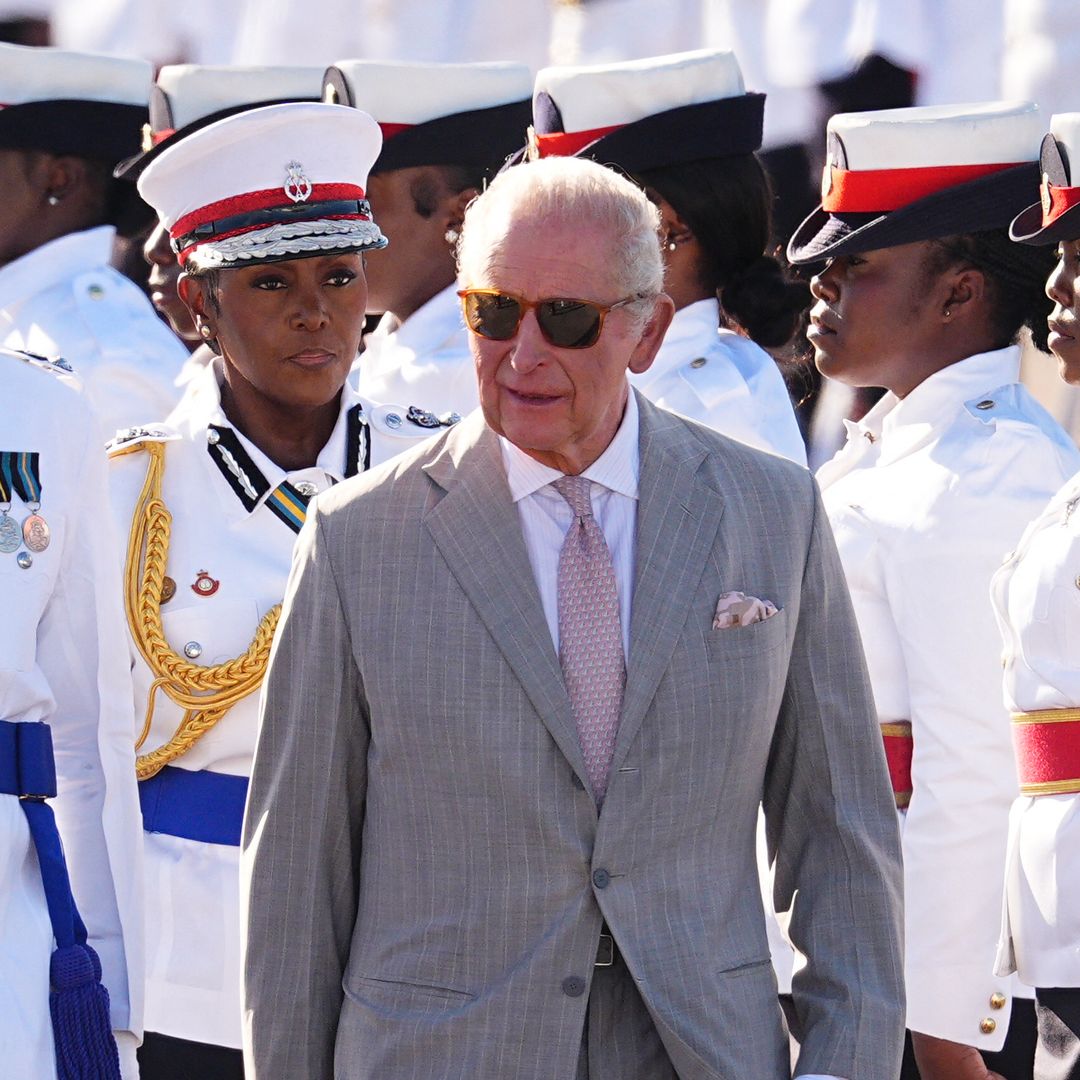
King Charles III got in the thick of things on his second day in the Bahamas. On Wednesday, the King of England traded the sidelines of a street parade for a spot right in the middle, burst out laughing at a T-shirt that made him into a boxing champion, and paused in a mangrove forest to reflect on his own mortality.
 © POOL/AFP via Getty Images
It made for some memorable images. But like other Windsor trips to the Caribbean, it came with a darker side, with King Charles facing calls from Bahamians seeking reparations for the UK's colonial past and its legacy of slavery. It's a problem that Charles promised to address at the upcoming Commonwealth leaders’ summit.
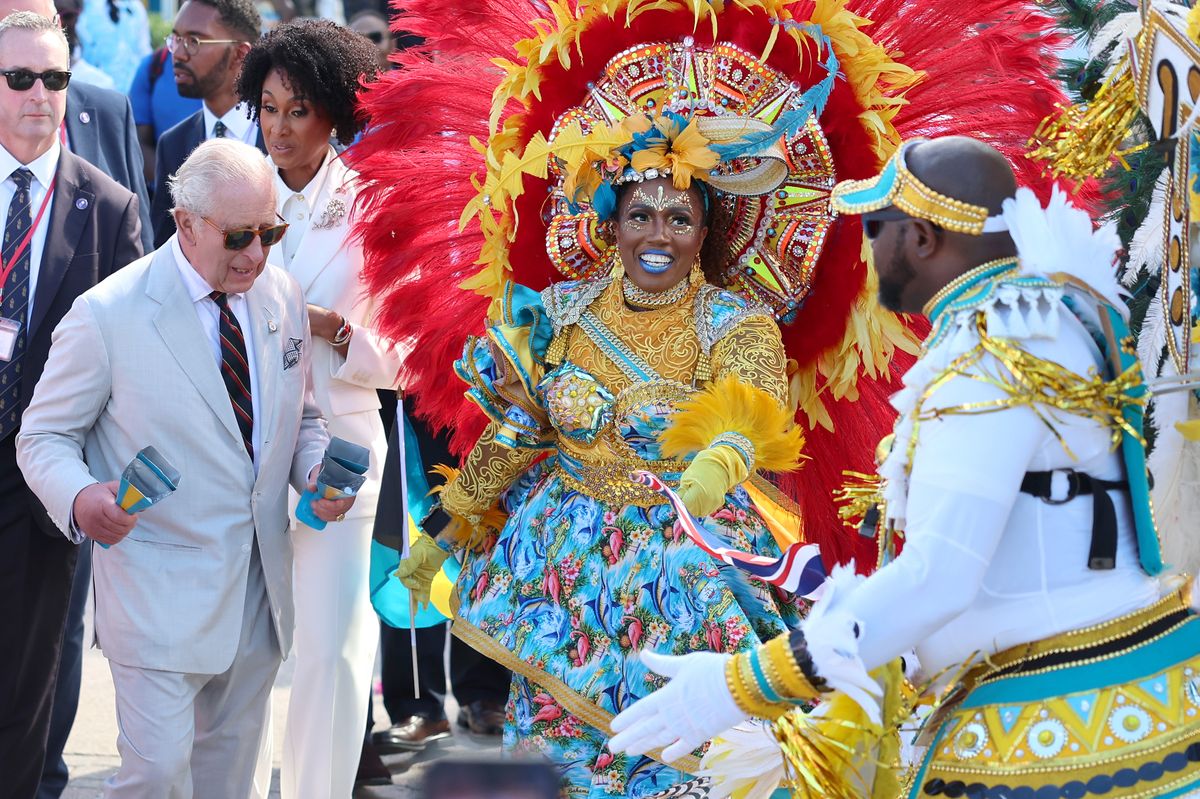
The most memorable photos took place in downtown Nassau, where a Junkanoo celebration in Parliament Square and Rawson Square was held to honor Charles at the invitation of Prime Minister Philip Davis. Dressed in a light-colored suit and sunglasses, a familiar uniform for royal tours in the tropics, Charles watched much of the parade from the sidelines before performers in feathered costumes coaxed him in. He didn’t need much persuading. Picking up the traditional Bahamian cowbells, Charles fell into step with the dancers as the crowd cheered him on.
 © Getty Images
Junkanoo traces its roots to the era of slavery, when enslaved people marked the three days off they were given at Christmas. Today, the festival is an exuberant expression of Bahamian cultural identity, staged on Boxing Day and New Year’s Day, with revelers parading along to music in dazzling costumes, often with their faces painted.
Charles also made time for the market that spills across Parliament Square, chatting with local vendors and learning about the island’s signature products. He lingered at fruit and vegetable stands and stopped by a street food stall to admire the traditional dishes of the former British colony.
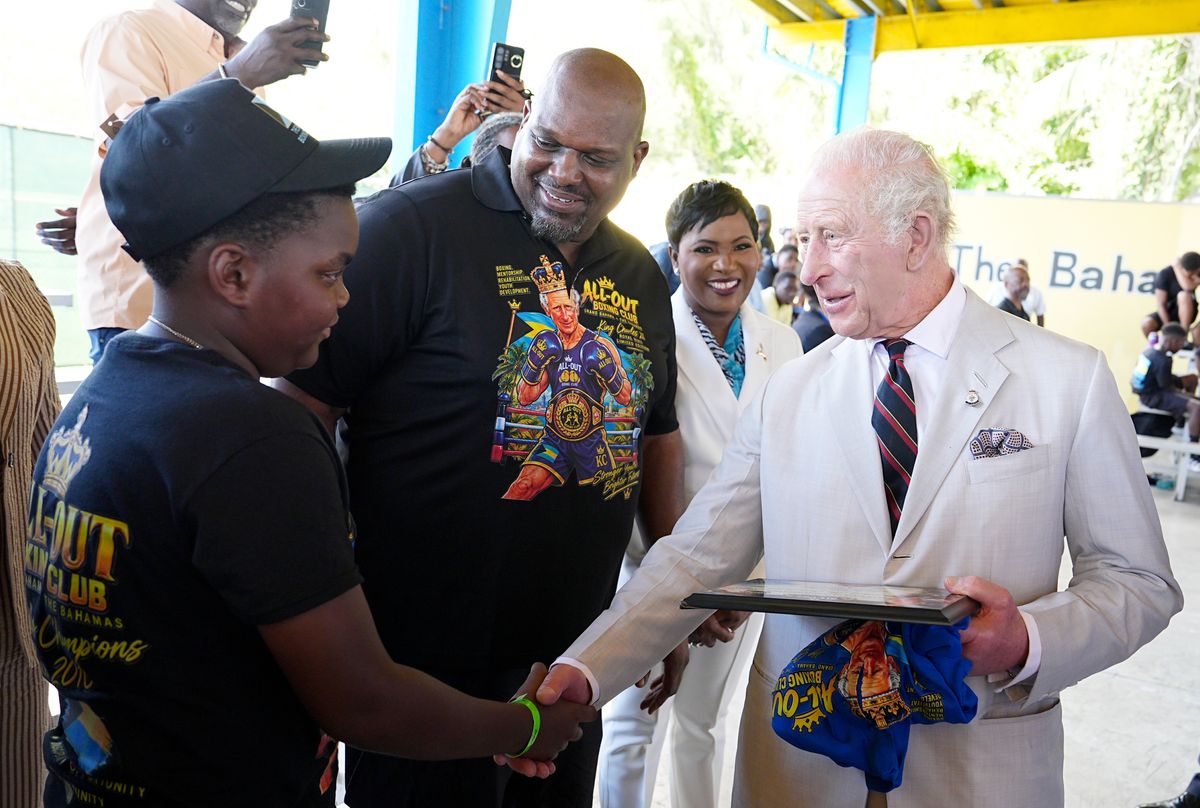
One of the day’s most charming moments came at the Bahamas Boxing Academy in Nassau’s Yellow Elder district. There, while watching young fighters train, the King met 12-year-old Sanai Miller and coach Jermaine Gibson, president and CEO of the All-Out Boxing Club, who greeted him wearing black T-shirts printed with a cartoon Charles in a crown, gloves, and boxing shorts. The King couldn’t hold back a laugh at the sight of himself as a pro. Gibson had made a third shirt the night before as a gift, and Charles accepted it, delighted.
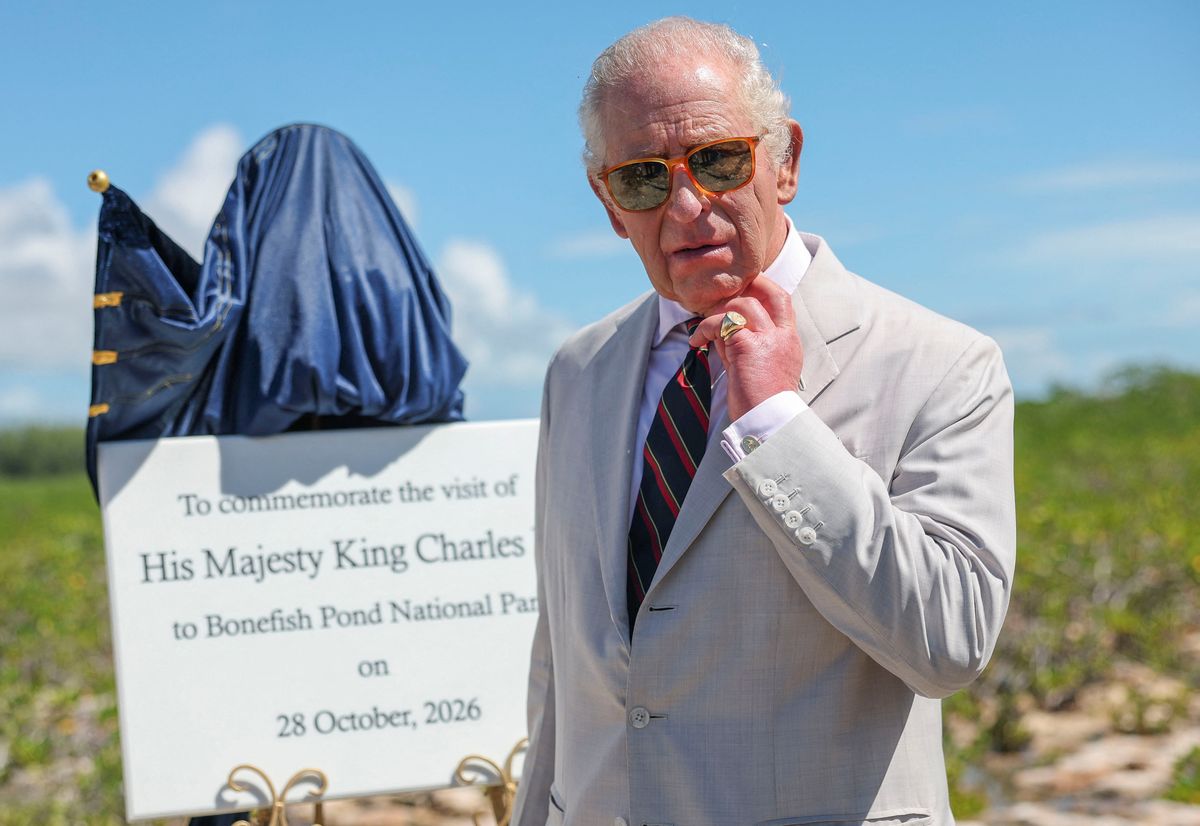
The day also took on a reflective note at Bonefish Pond National Park on New Providence, a restored mangrove wetland managed by the Bahamas National Trust. There, the King reminisced about his trips to the Bahamian island of Eleuthera in the 1970s, a destination he would later visit with Diana, Princess of Wales, early in their marriage. He took an interest in changes to the ecosystem and the effects of climate change, one of his defining causes. To mark the visit, he planted a silver buttonwood, a mangrove species native to the Bahamian coastline.
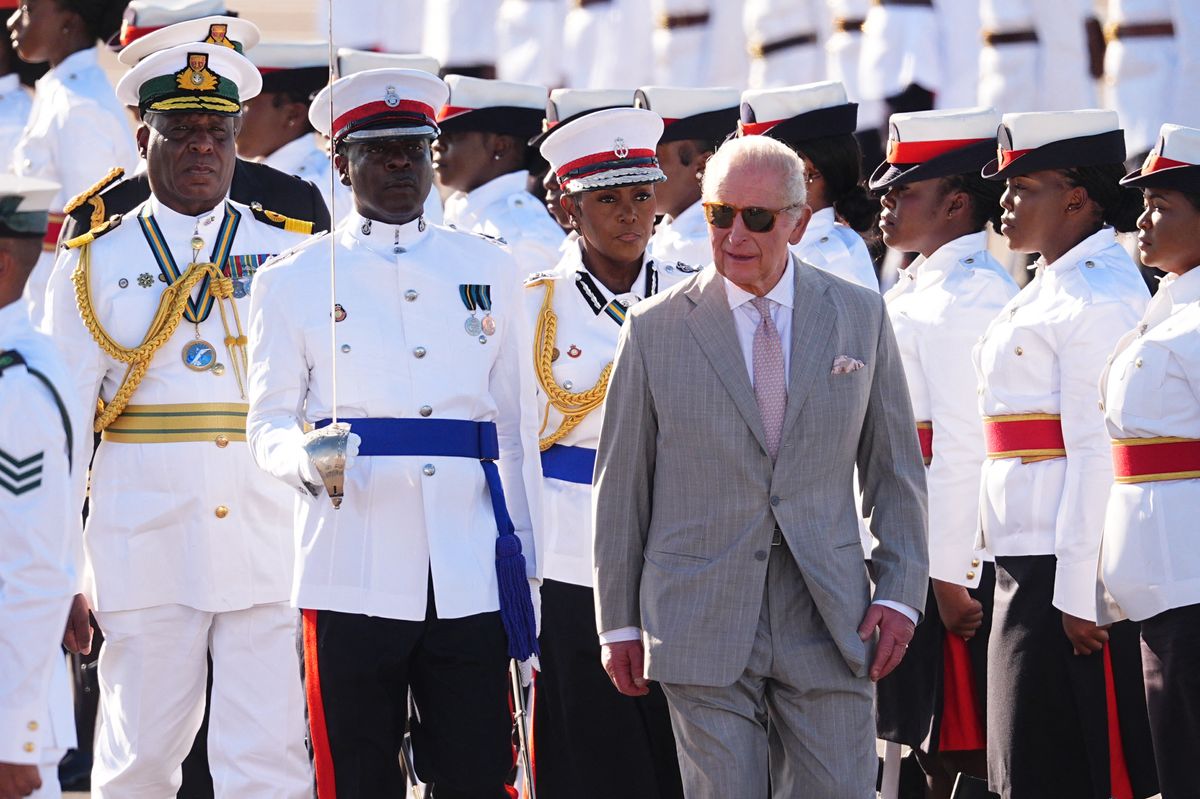
There was ceremony, too. Charles spent time with the Royal Bahamas Defence Force at its Coral Harbour base, where he inspected the troops.
 © Getty Images
Charles first visit as King
The visit marks his first official trip to the Bahamas as King, and his first official visit since 1973, when, as a young Prince of Wales, he represented Queen Elizabeth II at the celebrations marking Bahamian independence. That history hung over his arrival.
The Associated Press reported protesters near Clifford Park, who demanded reparations for slavery. The British government has consistently rejected calls for either an apology or compensation.
The Bahamas is the opening chapter of a nine-day Caribbean tour that Charles is undertaking on his own. After a stop in Guyana, he'll travel to Antigua and Barbuda for the Commonwealth Heads of Government Meeting, where Queen Camilla will join him.
 © Getty Images